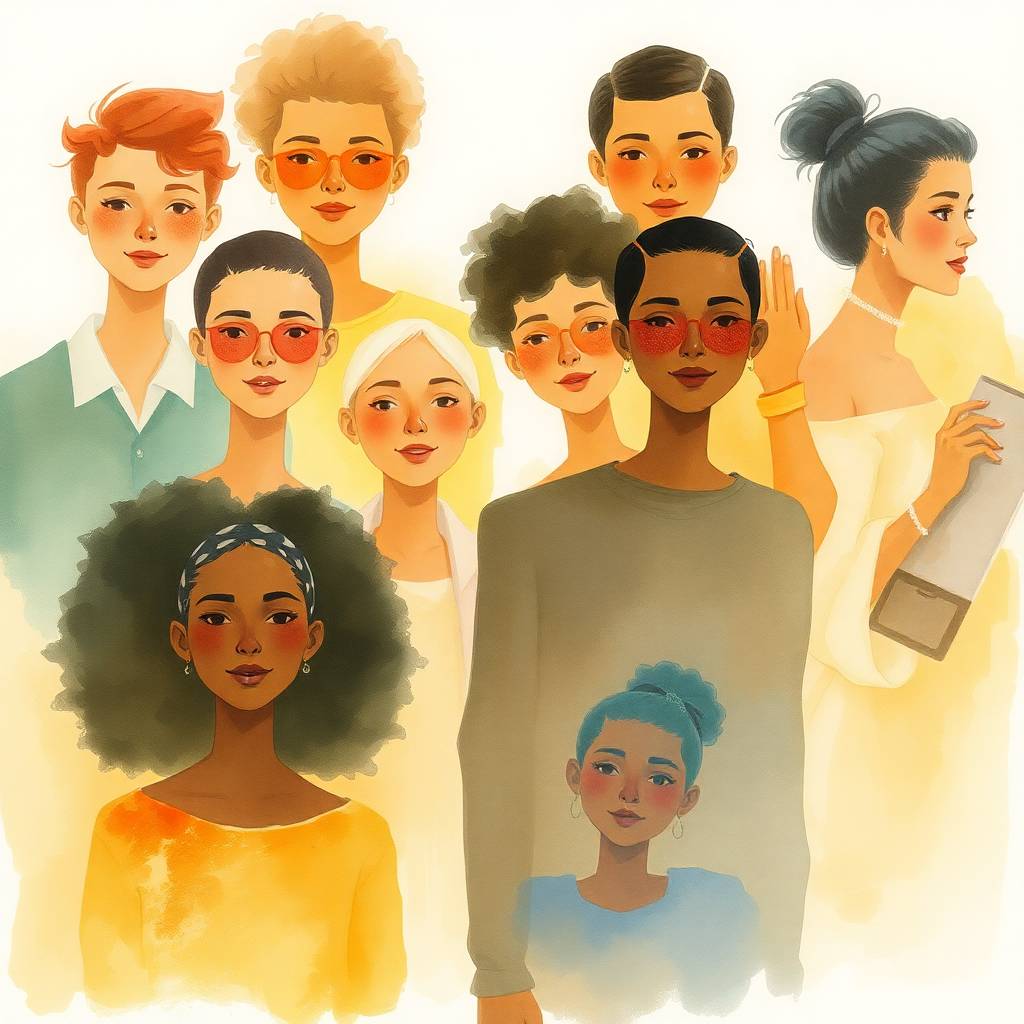
Emotional Wardrobe
How aligning outer form with inner dharma can transform emotional wellbeing
10-01-2026 • 8 min read
Introduction
Most of us try to change how we feel by working on our thoughts—through reflection, meditation, or therapy. Yet, in moments of emotional overwhelm, we often instinctively do something else: we change how we present ourselves. We dress differently, groom ourselves, or alter our appearance to feel more grounded, confident, or renewed.
This is not a coincidence.
Across cultures, rituals, and even in everyday life, outer expression has quietly shaped inner experience. This article explores a simple but powerful idea: can aligning our physical appearance with our emotional needs help regulate the mind?
Drawing from the Bhagavad Gita and modern psychology, we explore how changing the outer wardrobe may support the inner emotional landscape—and how this alignment can gently guide us toward a more authentic way of living.
Bhagavad Gita, Chapter 3, Verse 33 (3.33)
Verse
सदृशं चेष्टते स्वस्याः प्रकृतेर्ज्ञानवानपि ।
प्रकृतिं यान्ति भूतानि निग्रहः किं करिष्यति ॥
English Translation
"Even a wise person behaves according to their own nature. All beings follow their nature; what can mere restraint achieve?"
— Swami Chinmayananda
Psychological Interpretation: Why Willpower Alone Fails
In this verse, Krishna makes a radical psychological claim: awareness does not automatically override nature.
Even the knowledgeable continue to act through their prakṛti—their embodied tendencies, emotional patterns, and conditioning. Suppression and moral force may create short-term control, but rarely lasting transformation.
At The Relationships Lab, this aligns with a core psychological insight:
Sustainable emotional change requires working with the body, environment, and identity—not against them.
Dharma Is Not Abstract — It Is Embodied
A crucial but often overlooked detail in the Bhagavad Gita is where the teaching occurs.
Krishna does not teach Arjuna in a monastery.
He teaches him on a battlefield.
Both Krishna and Arjuna are:
- Dressed as warriors
- Surrounded by weapons
- Standing within the full sensory reality of conflict
Arjuna’s crisis is not theoretical—it is embodied, emotional, situational.
Krishna does not ask him to renounce the battlefield externally.
He asks him to align inwardly with his dharma, while remaining embodied in it.
This is a profound lesson:
Dharma is lived through form, role, posture, and environment—not just belief.
Nature Optimizes Form for Function
Consider how nature operates:
- Birds have hollow bones and wings for flight
- Aquatic beings develop streamlined bodies and gills
- Terrestrial animals have limbs adapted for gravity and ground
Each form is optimized to fulfil its dharma within its environment.
Humans are no different.
Our emotions, cognition, and behavior are deeply shaped by:
- The roles we occupy
- The environments we inhabit
- The forms we present to the world
Clothing is one of the most immediate expressions of this optimization.
Emotional States Follow Embodied Cues
Modern psychology calls this embodied cognition:
- The body influences the mind as much as the mind influences the body
- External cues regulate internal states
This explains why:
- Uniforms create discipline
- Ritual clothing induces reverence
- People instinctively change appearance during emotional transitions
When someone visits a salon during emotional distress, they are not being superficial—they are regulating their nervous system through form.
From Karma to Emotion to Form
The Gita offers an implicit flow:
Future Karma (what you are meant to grow into)
→ requires a certain emotional state
→ which is supported by behavior and embodiment
→ which can be gently influenced by outer form
Changing thoughts is hard.
Changing emotions is harder.
Changing environment and appearance is often easier.
This makes the physical wardrobe a low-resistance entry point for emotional realignment.
The Emotional Wardrobe: Aligning with Future Dharma
An emotional wardrobe is not about fashion trends or self-image. It is about becoming congruent with the person you are becoming.
Different clothing choices can support:
- Grounding during anxiety
- Strength during transition
- Safety during vulnerability
- Expansion during renewal
Just as a warrior dresses for battle and a monk for contemplation, emotional states also benefit from appropriate outer scaffolding.
This is not deception. It is design.
A New Dimension of Emotional Wellbeing
At The Relationships Lab, we see wellbeing as relational:
- Between mind and body
- Between emotion and environment
- Between present self and future self
This opens space for integrative approaches such as:
Emotional & Wardrobe Alignment Consultations
— helping individuals embody emotional states aligned with their evolving life direction.
Not to impose identity,
but to support alignment.
Closing Reflection
Krishna’s insight is subtle yet powerful:
Nature expresses itself—regardless of intention.
When outer form supports inner direction, restraint becomes unnecessary.
Action becomes natural.
Emotion becomes regulated.
Perhaps this is one quiet lesson of the Gita for modern psychology: to change who we are becoming, we may begin by changing how we show up.
Explore more integrative perspectives at
The Relationships Lab
— where ancient wisdom meets embodied emotional science.