The Three Layers of the Human Being: A Vedantic Psychological Perspective
Understanding the Physical, Subtle, and Causal Bodies for Emotional Clarity
29-12-2025 • 7 min read
Introduction
Modern psychology studies behavior, cognition, and emotions largely through observable patterns and mental processes.
Vedanta, as revealed in the Bhagavad Gita, goes deeper — it studies the structure of the human being itself.
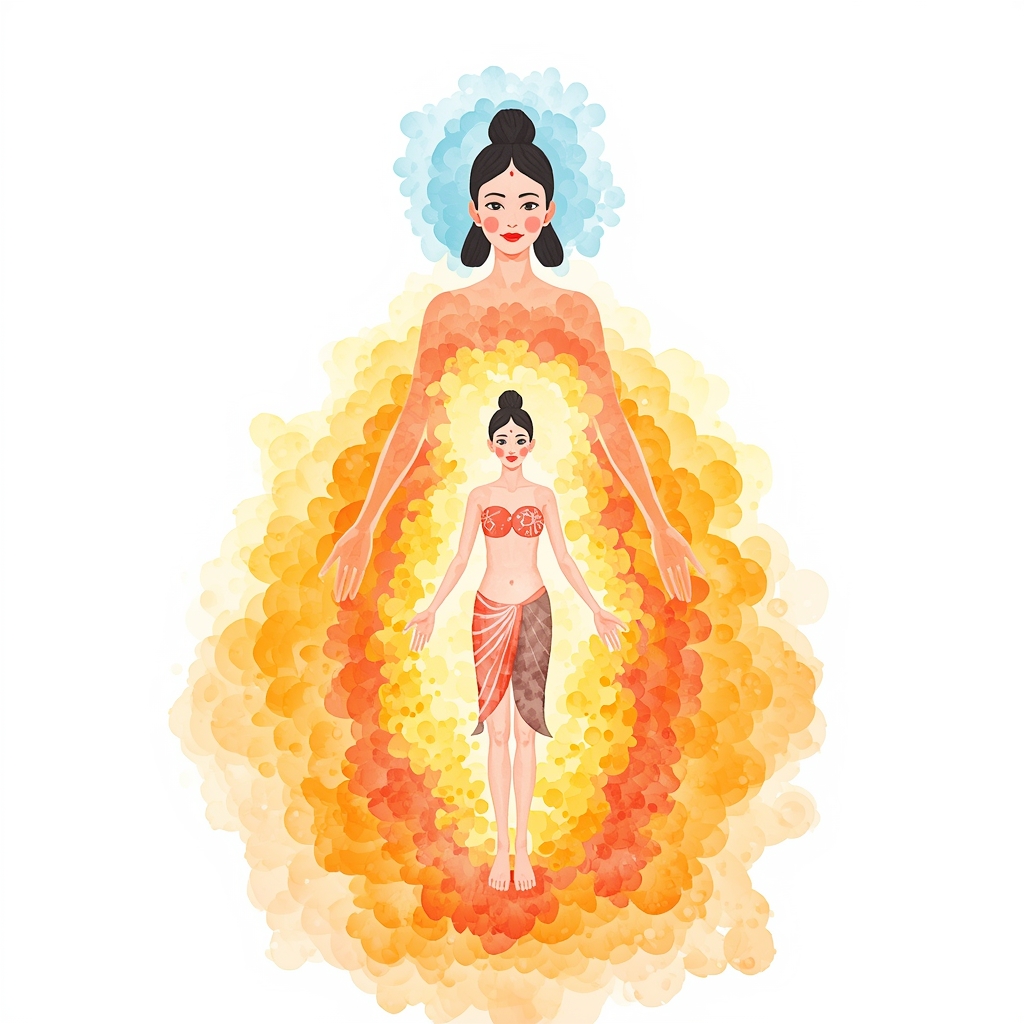
According to Vedantic thought, we are not merely a physical body with a mind. We are layered beings, composed of three fundamental bodies (śarīras):
- Sthūla Śarīra — the Physical Body
- Sūkṣma Śarīra — the Subtle Body
- Kāraṇa Śarīra — the Causal Body
Understanding these layers forms the foundation of what we call the Vedantic Psychological System — a framework that explains emotional clarity, inner conflict, and self-transformation at their root. In the Vedantic Psychological System, much of this inner work becomes visible most clearly in our relationships. This insight forms the foundation of The Relationships Lab — a space where emotional patterns are observed not in isolation, but in real human connection.
1. The Physical Body (Sthūla Śarīra)
The physical body is the most visible layer of our existence.
It is composed of the five gross elements (pañca mahābhūtas): earth, water, fire, air, and space.
In the Bhagavad Gita, Krishna refers to this body as temporary and perishable:
“Antavanta ime dehā nityasyoktāḥ śarīriṇaḥ” (Gita 2.18)
“These bodies are perishable, while the indweller is eternal.”
Psychological Role
- Acts as the instrument through which experiences occur
- Stores stress, trauma, and emotions somatically
- Reflects inner imbalance through fatigue, restlessness, or disease
While important, Vedanta makes it clear: the physical body is not the seat of emotional confusion. For that, we must look deeper.
2. The Subtle Body (Sūkṣma Śarīra)
The subtle body is the core focus of the Vedantic Psychological System.
It includes:
- The mind
- The intellect
- The ego-sense
- The memory and emotional storehouse
- The vital energies (prāṇa)
This is where thoughts arise, emotions fluctuate, decisions are made, and suffering is felt.
The Four Antaḥkaraṇas (Inner Instruments)
Vedanta divides the subtle body’s psychological functioning into four precise components:
1. Manas (Mind)
- Generates thoughts and doubts
- Oscillates between options
- Seat of likes, dislikes, and emotional reactions
2. Buddhi (Intellect)
- Discriminates and decides
- Determines clarity vs confusion
- Responsible for wisdom and insight
3. Ahaṅkāra (Ego)
- Creates the sense of “I” and “mine”
- Identifies with roles, emotions, and achievements
- Root of insecurity and comparison
4. Citta (Memory Store)
- Stores impressions (saṁskāras)
- Holds past emotional residues
- Shapes habitual reactions
Relationships as a Mirror of the Subtle Body
Our deepest emotional patterns do not surface in solitude — they surface in relationships.
This is why, within the Vedantic Psychological System, we use relationships as a living laboratory.
In The Relationships Lab, interactions become mirrors:
- Triggered emotions reveal the state of manas
- Conflicts expose the rigidity of ahaṅkāra
- Repeated patterns point to stored impressions in citta
- Moments of clarity reflect the strength of buddhi
Rather than fixing the other person, the focus shifts inward — toward refining the inner instruments themselves.
Psychological Insight
Most emotional suffering arises not from events, but from misalignment among these four inner instruments.
- A restless manas
- A weak or biased buddhi
- An over-identified ahaṅkāra
- An unprocessed citta
The Bhagavad Gita repeatedly emphasizes mastery over this inner field:
“Uddhared ātmanātmānaṁ” (Gita 6.5)
“One must lift oneself by oneself.”
Vedantic psychology is thus self-work, not self-judgment.
3. The Causal Body (Kāraṇa Śarīra)
The causal body is the deepest and most subtle layer.
It is:
- The seed body
- The repository of ignorance (avidyā)
- The cause behind repeated patterns of birth, behavior, and suffering
Unlike the subtle body, it is not active — it is potential.
Psychological Role
- Stores the root tendencies that shape personality
- Responsible for deep-seated fears, attachments, and unconscious conditioning
- Beyond ordinary introspection
In Vedantic terms, this is where ignorance of one’s true nature resides.
“Avyakta hi gatir duḥkhaṁ” (Gita 12.5)
“The unmanifest path is difficult for embodied beings.”
How Emotional Clarity Emerges
Emotional clarity does not come from suppressing emotions or endlessly analyzing thoughts.
It comes from:
- Refining the subtle body
- Aligning the antahkarana
- Reducing egoic misidentification
- Cleaning stored impressions in citta
When:
- Manas becomes calm
- Buddhi becomes clear
- Ahaṅkāra becomes flexible
- Citta becomes lighter
…the individual naturally experiences inner order and emotional stability.
This is the operational core of the Vedantic Psychological System. Practices within The Relationships Lab are designed to bring this emotional clarity into lived experience — not by avoiding relationships, but by using them consciously as fields of inner observation.
Beyond the Three Bodies
Vedanta ultimately points beyond all three bodies to the Ātman — the silent witness.
Krishna declares:
“Na jāyate mriyate vā kadācin” (Gita 2.20)
“The Self is never born, nor does it die.”
But practical wisdom begins within the subtle body, where daily emotional life unfolds.
Conclusion
The Bhagavad Gita offers not merely philosophy, but a precise psychological map of the human being.
- The physical body experiences the world
- The subtle body interprets and reacts
- The causal body conditions long-term patterns
By consciously working with the four antahkaranas, one moves from emotional confusion to emotional clarity — not by force, but by understanding.
This is the promise of Vedantic psychology:
clarity through knowledge, balance through awareness, and freedom through self-understanding.
The Relationships Lab explores how these principles play out in real emotional life — through reflection, awareness practices, and conscious relational inquiry. In upcoming modules, we will explore practical methods to refine each antahkarana and apply these insights in daily emotional life.